
Concept of Cyber Space and International Security
In the modern digital era, technology has become an essential part of everyday life. People communicate, conduct business, study, and store information using the internet and computer networks. All of these activities take place in what is known as cyber space. Cyber space is a virtual environment created by interconnected computer systems and networks across the world.
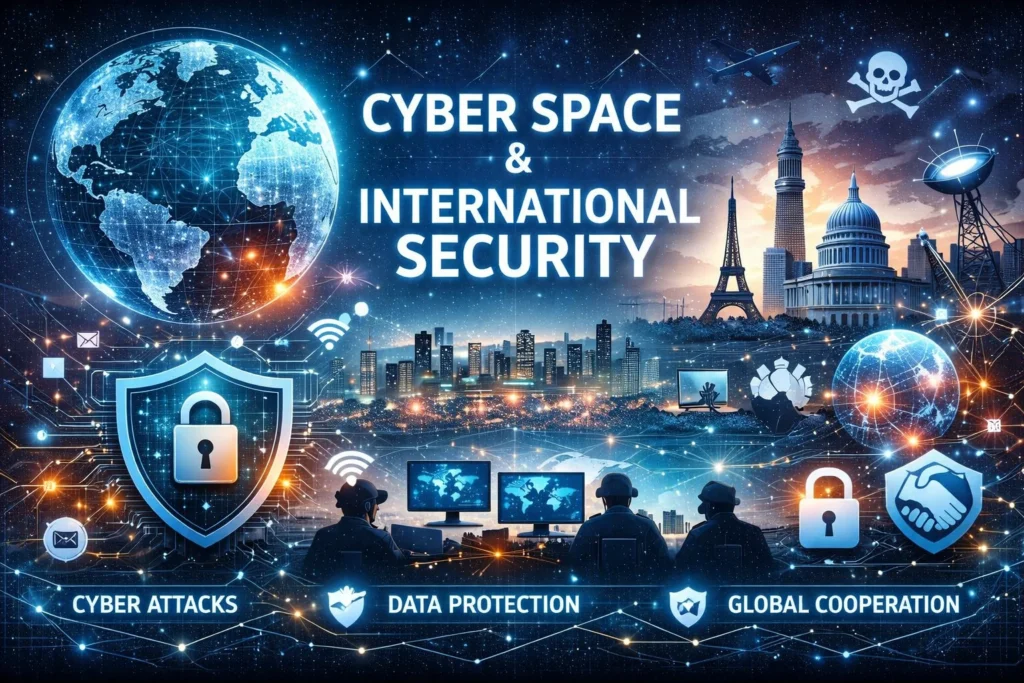
As countries, businesses, and individuals increasingly depend on digital technologies, the importance of protecting cyber space has also grown. Cyber attacks, data theft, and digital espionage can threaten not only individuals but also national security. Because cyber threats can cross borders easily, cyber security has become an important part of international security. Understanding the concept of cyber space and its connection to global security is therefore essential in today’s world.
What is Cyber Space?
Cyber space refers to the digital environment formed by computers, networks, servers, mobile devices, and the internet. It is a virtual space where users interact, communicate, and exchange information electronically. Unlike physical space, cyber space does not exist in a specific geographic location. Instead, it exists through the connection of millions of digital devices worldwide.
Cyber space enables many activities such as:
Email communication
Social media interaction
Online education
E-commerce and online banking
Digital entertainment
Cloud storage and data sharing
Every time someone sends a message, visits a website, or performs an online transaction, they are operating within cyber space. It allows people from different countries to connect instantly and share information without physical boundaries.
Components of Cyber Space
Cyber space is made up of several important components that work together to create the digital environment.
1. Computer Systems
Computers and digital devices such as smartphones, tablets, and servers form the foundation of cyber space. These devices process and store digital information.
2. Networks
Networks connect devices together so they can communicate with each other. The internet is the largest global network that enables cyber space to function.
3. Software and Applications
Programs, operating systems, and applications allow users to perform tasks such as browsing the internet, sending emails, and managing data.
4. Data and Information
Information stored and transmitted in digital form is an essential element of cyber space. This includes personal data, financial records, government information, and business files.
5. Users
People, organizations, and governments who use digital technologies are also part of cyber space. Their activities create the dynamic nature of the cyber environment.
Importance of Cyber Space in Modern Society
Cyber space plays a major role in modern life and global development. It provides numerous benefits to individuals, businesses, and governments.
Communication
Cyber space enables instant communication through emails, messaging apps, and video conferencing. People can easily communicate with others across the world.
Business and Economy
Online platforms allow businesses to operate globally. Companies can sell products, provide services, and conduct financial transactions through the internet.
Education
Students and teachers use digital platforms for online learning, research, and sharing educational resources.
Government Services
Governments use digital systems to provide public services, manage information, and communicate with citizens.
Information Access
The internet provides access to vast amounts of knowledge and information, helping people learn and stay informed.
Because of these advantages, societies have become highly dependent on cyber space.
Cyber Threats in the Digital World
Despite its benefits, cyber space also introduces several security risks. Cyber threats are activities that attempt to damage, steal, or disrupt digital systems and information.
Some common cyber threats include:
Hacking
Hackers attempt to gain unauthorized access to computer systems or networks to steal or manipulate data.
Malware
Malicious software such as viruses, worms, and ransomware can damage computers or block access to important data.
Phishing
Phishing attacks trick users into providing sensitive information such as passwords, bank details, or personal data.
Cyber Espionage
Countries or organizations may secretly collect confidential information from other nations through cyber activities.
Cyber Terrorism
Cyber terrorists may attack government systems, infrastructure, or communication networks to create fear or disrupt national stability.
These threats can affect individuals, businesses, and entire countries.
Cyber Space and International Security
Because cyber space connects countries around the world, cyber threats can easily cross national borders. This makes cyber security a critical part of international security.
International security refers to the protection of nations and global systems from threats that can harm peace, stability, and economic development. In the digital age, cyber attacks can target government institutions, financial systems, military networks, and critical infrastructure.
For example, cyber attacks can disrupt:
Electricity and power systems
Banking and financial networks
Transportation systems
Military communication systems
Government databases
Such attacks can cause economic damage, political conflict, and national instability. Therefore, protecting cyber space has become a global priority.

Importance of Cyber Security for International Stability
Cyber security plays an important role in maintaining international peace and stability. Several factors highlight its importance.
Protection of Critical Infrastructure
Critical infrastructure such as power grids, healthcare systems, and communication networks must be protected from cyber attacks to ensure public safety.
National Defense
Countries must secure their military systems and national security data from cyber espionage and digital warfare.
Economic Protection
Cyber attacks on financial institutions can disrupt global markets and cause major economic losses.
Protection of Personal Data
Cyber security helps protect the personal and private information of millions of internet users.
Prevention of Cyber Warfare
Strong cyber defense strategies can prevent conflicts between nations that may arise from cyber attacks.
International Cooperation in Cyber Security
Since cyber threats are global in nature, countries must work together to combat cyber crime and maintain security. International cooperation plays a key role in managing cyber risks.
Countries collaborate by:
Sharing cyber threat intelligence
Developing international cyber security laws
Conducting joint investigations against cyber criminals
Establishing global cyber security organizations
Promoting responsible behavior in cyber space
Through cooperation, nations can build stronger defenses and respond more effectively to cyber threats.
Future Challenges in Cyber Space
As technology continues to evolve, cyber space will face new challenges. Emerging technologies such as artificial intelligence, cloud computing, and the Internet of Things (IoT) will increase the complexity of cyber security.
Future challenges may include:
More sophisticated cyber attacks
Increased cyber warfare between nations
Data privacy concerns
Security risks in smart devices and connected systems
To address these challenges, governments, organizations, and individuals must continuously improve their cyber security practices.
Cyber space has become an essential part of modern life, connecting people, businesses, and governments across the world. It provides many benefits such as fast communication, access to information, and economic growth. However, it also introduces serious security risks that can threaten individuals and nations.
Because cyber threats can easily cross national borders, cyber security is now closely linked with international security. Protecting digital systems, critical infrastructure, and sensitive information is essential for maintaining global stability and peace. Through strong cyber security measures and international cooperation, countries can work together to ensure that cyber space remains a safe and reliable environment for everyone.